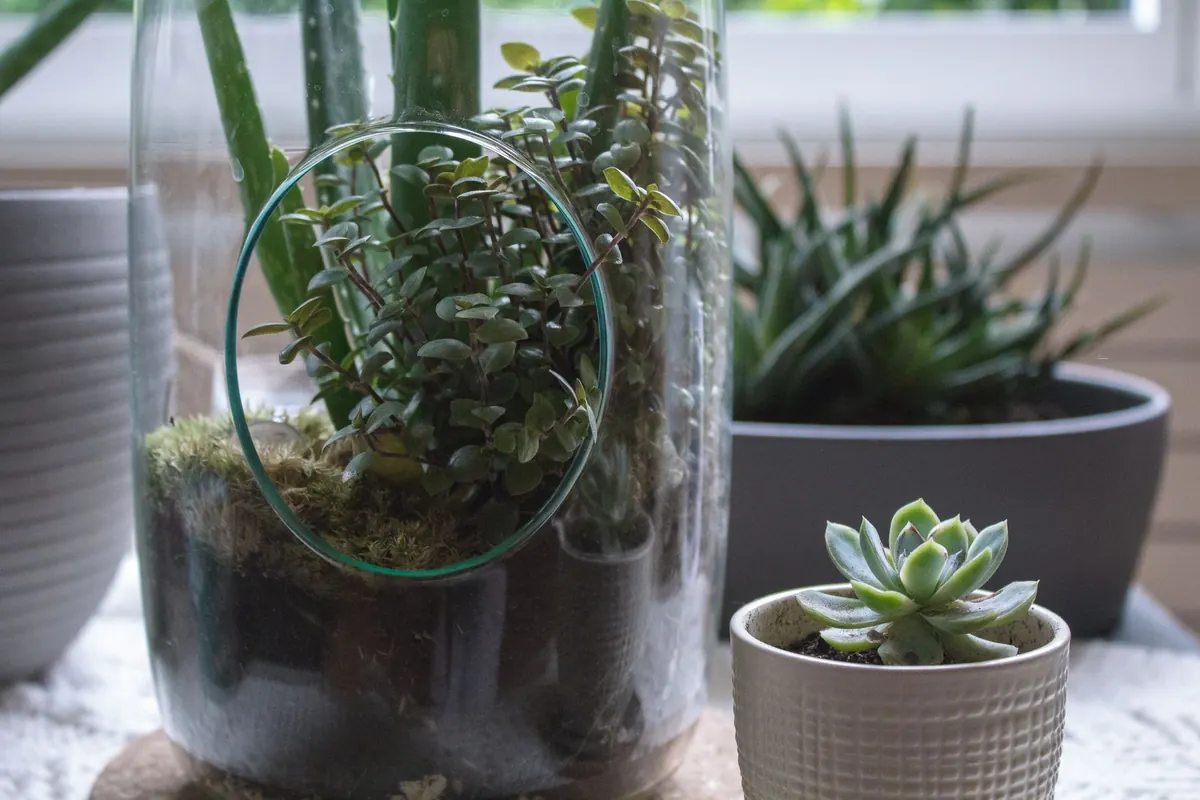
A glass jar, a handful of moss, a lid. That is the entire setup, and the only real decision is whether the lid stays on. It is also the decision that changes everything afterwards: how often you water, which mosses survive, and whether you end up with a soft green cushion or a grey, fuzzy disappointment.
Neither approach is better on its own. What matters is your home, your light levels, and how much fiddling you want. Here is how sealed and open terrariums compare in British conditions.
Two different habitats, one windowsill
A closed terrarium is a miniature water cycle. Moisture evaporates from the moss and substrate, condenses on the glass, and runs back down. Very little escapes, so the air inside stays close to saturated. You are effectively keeping a small, humid microclimate on a shelf.
An open terrarium is a houseplant in a glass bowl. Air moves freely, moisture leaves, and the moss lives at whatever humidity your room happens to be. In a British living room that might be comfortable in autumn and bone dry in February with the heating on.
Neither is harder to build. They are just different jobs: one is about restraint, the other about routine.
Humidity: the gap that shapes everything else
In a sealed jar, relative humidity can sit high enough that the glass fogs after watering. Moss loves this. Most mosses have no proper roots and take water straight through their leaves, so damp air does much of the work for you.
Open setups sit much closer to room humidity, which in UK homes often falls somewhere between 40 and 60 per cent — and lower in heated rooms during winter. That is survivable for many mosses, but only with regular topping up. Expect to mist more in January than in June, and more in a flat with radiators than in a cool, north-facing room.
The practical test is simple. If the moss looks crisp and feels brittle at the tips, humidity is too low. If the glass never clears and water pools at the bottom, it is too high — and that is almost always a closed-terrarium problem.
Mould, algae and the damp British problem
Mould is the main risk with sealed jars, and overwatering is nearly always the cause. A closed container with soggy substrate, no airflow and a warm spot is a perfect incubator. Dead leaves and fallen scraps of moss make it worse.
Algae is more of an open-terrarium issue. Constant wetness on the glass and the surface of the substrate encourages a green film, especially in bright light.
Both setups benefit from a little air movement. Give a sealed jar five minutes with the lid off once a week, and wipe condensation from the glass with a clean cloth. If you spot grey fuzz, white threads or a sour smell, remove the affected moss, cut back on water and leave the lid off for a day. Springtails — tiny jumping arthropods sold for terrariums — graze on mould and algae, and are worth adding to either setup.
A sealed jar that fogs heavily all day and never clears is not healthy, however pretty it looks. That is a warning, not a feature.
Watering: a routine for each
Closed: water once when you build it, using rainwater or filtered water if you can. After that, most sealed terrariums need nothing for weeks or months. Top up with a light mist only when the moss feels dry and condensation has stopped forming.
Open: check every few days. Mist the moss and the substrate surface until it is damp but not soaked, then let it dry slightly before the next mist. In winter, in a heated room, that might mean every two or three days. In a cool bathroom with a window, once a week may be plenty.
- Signs a closed terrarium is too wet: standing water in the base, glass that stays fogged all day, moss that feels slimy rather than springy, grey fuzz on the surface, or a sour smell when you open the lid.
- Signs an open terrarium is too dry: brown, crisp tips, moss that crackles when touched, substrate pulling away from the glass, and a container that feels weightless when you lift it.
Which mosses suit which setup
For sealed jars
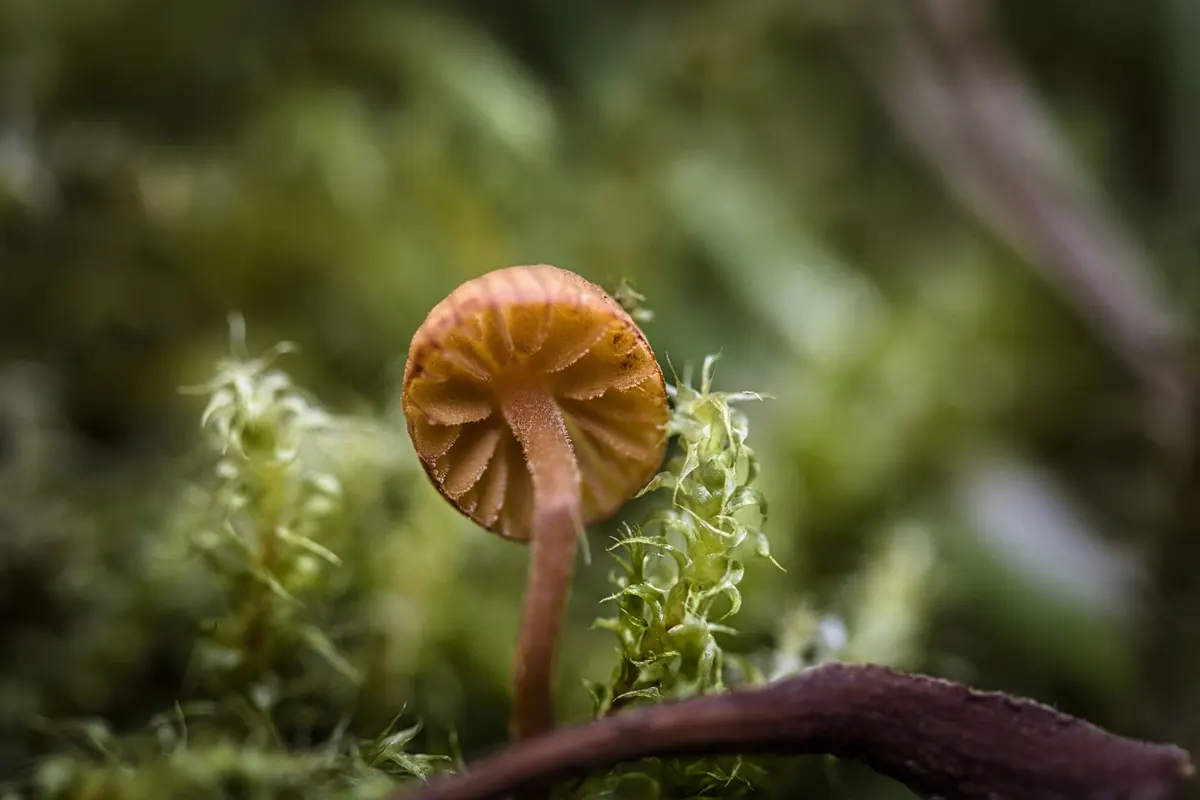
Constant humidity suits mosses that rarely dry out in the wild. Sphagnum works well and looks wonderfully lush, though it prefers acidic, boggy conditions. Cushion-forming mosses such as Leucobryum and neat sheet mosses like Hypnum cupressiforme settle in nicely, while palm-tree moss (Climacium dendroides) gives a little height at the back of the jar.
For open containers
Choose mosses that cope with drying. Species from walls, pavements and dry lawns are ideal, because they already do this every day: wall screw moss (Tortula muralis), silver moss (Bryum argenteum), springy turf moss (Rhytidiadelphus squarrosus) and common haircap (Polytrichum commune). These rehydrate after a dry spell and will not sulk if you forget a misting.
Collect only small amounts, from places where picking is allowed, and never from nature reserves or protected sites. Buying nursery-grown moss avoids the question altogether.
Matching the jar to your home and habits
- Dry, centrally heated flat with bright windows: an open container, with a mister kept nearby. A sealed jar also works if you keep it out of direct sun and away from radiators.
- Cool, damp room, north-facing: sealed suits it perfectly. An open setup here will need misting every few days.
- Forgetful waterer, or away often: sealed, without question.
- Someone who likes to potter and prune: open, so you have something to do.
A sensible way to start
Begin with one small jar rather than a shelf of them. A glass container of a litre or two, with a lid you can remove, gives you both options: keep the lid on while the moss settles, then decide which way you want to run it.
Place either setup in bright, indirect light. A north or east windowsill is usually safer than a south-facing one, where sealed jars can overheat and open ones dry out within hours. In winter, light is the real limiting factor in most UK homes, and moss copes with low light far better than with a blazing July windowsill.
Use rainwater where you can. Tap water in hard areas leaves limescale on the glass and can build up salts in the substrate over time.
Then resist the urge to fuss. Most terrarium failures come from too much water and too much handling, not too little. Pick the setup that matches how you actually live, and let the moss do the rest.
Photo: Susanna Marsiglia / Pexels