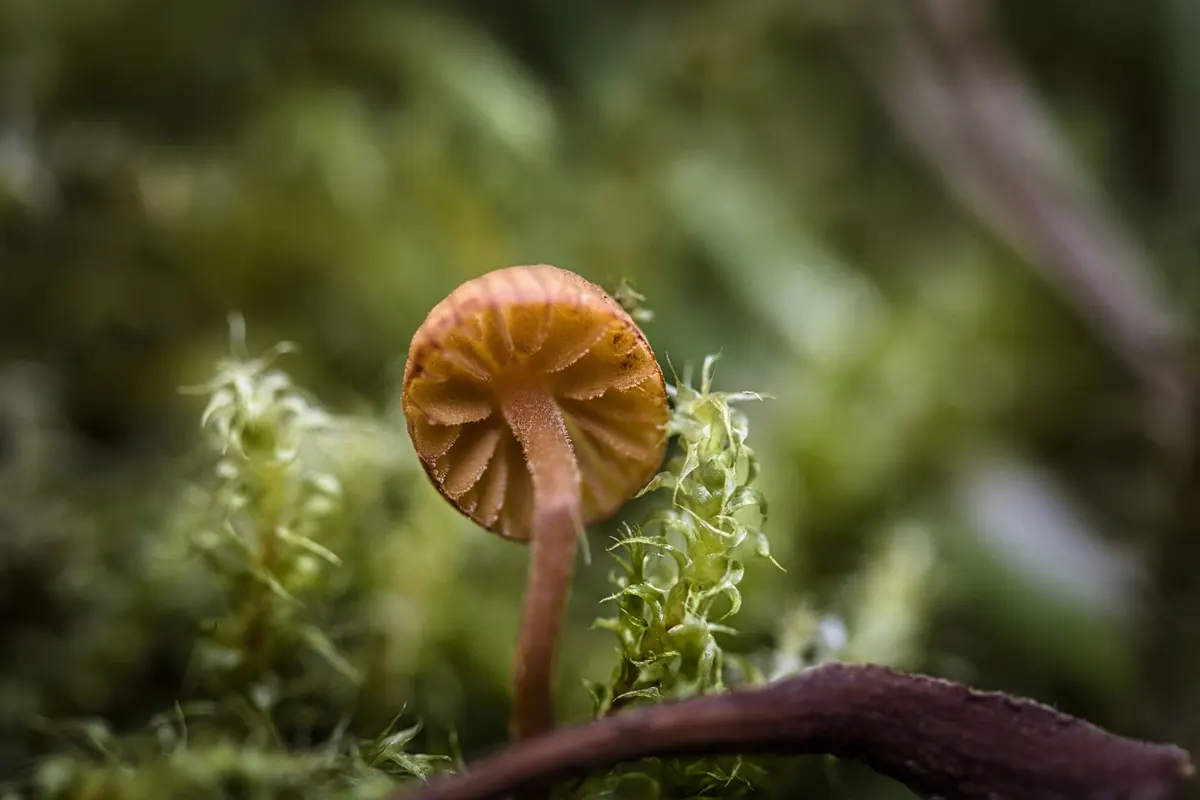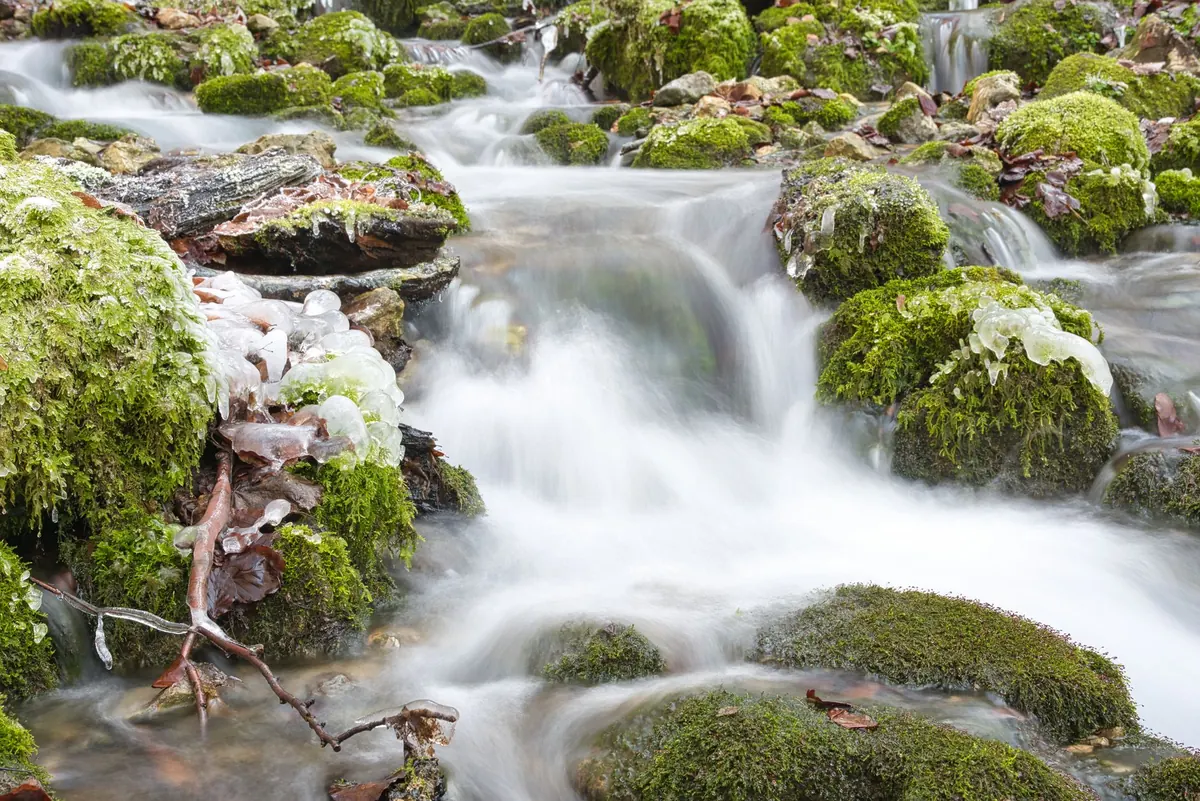
Moss does not drink the way a fern or a ficus does. It has no proper roots and no internal plumbing to haul water up from a pot, so it absorbs moisture across its whole surface, cell by cell. That single fact explains most of the mistakes people make with indoor moss. You are not really watering a plant; you are keeping a living sponge inside a narrow band of damp — never bone dry, never sitting in a puddle.
Get that balance right and moss becomes one of the most forgiving things to grow indoors. Get it wrong and a green cushion can turn to straw in a week, or rot quietly from the base while still looking respectable on top. The routine below keeps you in the middle.
Why moss behaves differently to a houseplant
Mosses are non-vascular plants. The little threads that hold them to stone or bark, the rhizoids, are anchors rather than roots — they do not draw water up in any meaningful way. Every cell that needs moisture takes it from the film of water lying on the surface. That is why moss that looks dry on top really is dry, even when the compost beneath is still damp. It also means air matters as much as water: a sheet of moss on slate can thrive with almost no soil, while the same moss pressed onto soaking compost in a sealed jar will sulk and rot.
Three watering methods that work
Fine misting
The default for open setups: moss on a tray, a rock, a piece of cork bark. Use a sprayer with a fine nozzle and mist from 20–30cm away, sweeping across the surface rather than aiming at one spot. A coarse spray puddles and shoves the moss about; a fine mist lands evenly. Two or three passes, until the surface darkens and glistens, is usually enough.
Tray or capillary watering
Best for moss in shallow pots and trays. Stand the container in a centimetre of water for ten to twenty minutes, then lift it out and let it drain. Moisture wicks up through the compost and the moss draws from below. This is the least fiddly method if you are out of the house all day, because it delivers a proper soak instead of a quick surface dab.
Dunking
For mounted moss, or moss that has dried out further than you would like, submerge the whole piece in a bowl of room-temperature water for two to five minutes. Lift it out, let it drip over the sink, and put it back once it has stopped streaming. This resets a dry patch quickly, but treat it as a rescue rather than a habit — repeated dunking of moss on wood or stone invites rot underneath.
Water in the morning where you can. Moss that goes into the night damp and cool, with no air moving, is where mould begins.
How often should you water?
Ignore any schedule with a number attached. Frequency depends on the enclosure, the room and the season. A moss wall in a warm living room may want misting daily, sometimes twice, in winter when central heating strips humidity from the air. A lidded terrarium might need attention once every two to three weeks. Moss on a cool north-facing windowsill needs far less than moss sitting beside a radiator.
The reliable test takes two seconds. Press a fingertip gently into the moss:
- If the dent springs back and the surface feels cool and springy, leave it alone.
- If your fingerprint stays, it has dried past the point it enjoys — water it.
- If water squeezes to the surface when you press, it is too wet. Stop and let it dry back.
Check at the same time each day and you will soon learn your setup's rhythm. Adjust with the seasons rather than repeating what worked in July.
Signs you are under-watering
Dry moss tells you clearly, though you have to look closely. The colour dulls from green to grey-green or brown, the texture turns crisp, the tips curl inward and the whole piece feels brittle rather than soft. It may lift away from whatever it was growing on, and it often looks dusty.
The encouraging news is that many mosses go dormant rather than dying, and green up within a day or two of a good soak. Some tropical species from humid terrariums are less forgiving, and repeated drying-out will finish them. If dryness keeps happening, move the moss somewhere less exposed rather than simply watering more often.
Signs you are over-watering
Over-watering is slower and nastier, because the top can look wonderful while the base turns to sludge. Watch for:
- A sour, musty smell when you lean close or lift the lid.
- Black or brown mushy patches underneath, with the moss peeling away cleanly.
- White fuzzy mould on wood, cork or the base of the moss.
- Green algae or slime on glass, stone and compost, especially in bright light.
- A permanent wet sheen that never dries, or yellowing from the bottom up.
If you spot two or more of these, stop watering altogether. Increase airflow — a small fan on its lowest setting, or simply a better-ventilated spot — and let the surface dry to the touch before you mist again. Cut away any blackened sections; they will not recover, and they spread rot into healthy growth.
Water quality and temperature
Use water at room temperature. Cold water straight from the tap shocks moss and slows it down. Rainwater from a butt is ideal, and filtered water is a good second choice. Tap water is workable in most of the UK, but hard water leaves chalky white deposits over time, and standing it overnight only shifts chlorine, not the minerals. If your tap water is very hard, a filter jug makes a noticeable difference to how the moss looks after a few months. Never use softened water, and never add fertilizer — feeding a moss tray grows algae, not moss.
The simple weekly routine
Put it all together and the daily job takes a couple of minutes.
- Morning check. Press the surface, smell the air, glance underneath for dark patches.
- Pick one method. Mist if it is slightly dry, tray-water if it is properly dry, dunk only if it is crispy.
- Drain and ventilate. No standing water, and a few hours of moving air afterwards.
- Note what you did. A date and a method in a notebook beats guessing a fortnight later.
Once a week, do a proper inspection: lift the moss where you can, check the underside, trim away brown or black patches and wipe condensation from glass. Ten minutes on a Sunday prevents most of the problems above.
Water less than you think, more often than you would like, and always give the moss a chance to breathe between drinks. That is the whole art of it.
Photo: Street Donkey / Pexels