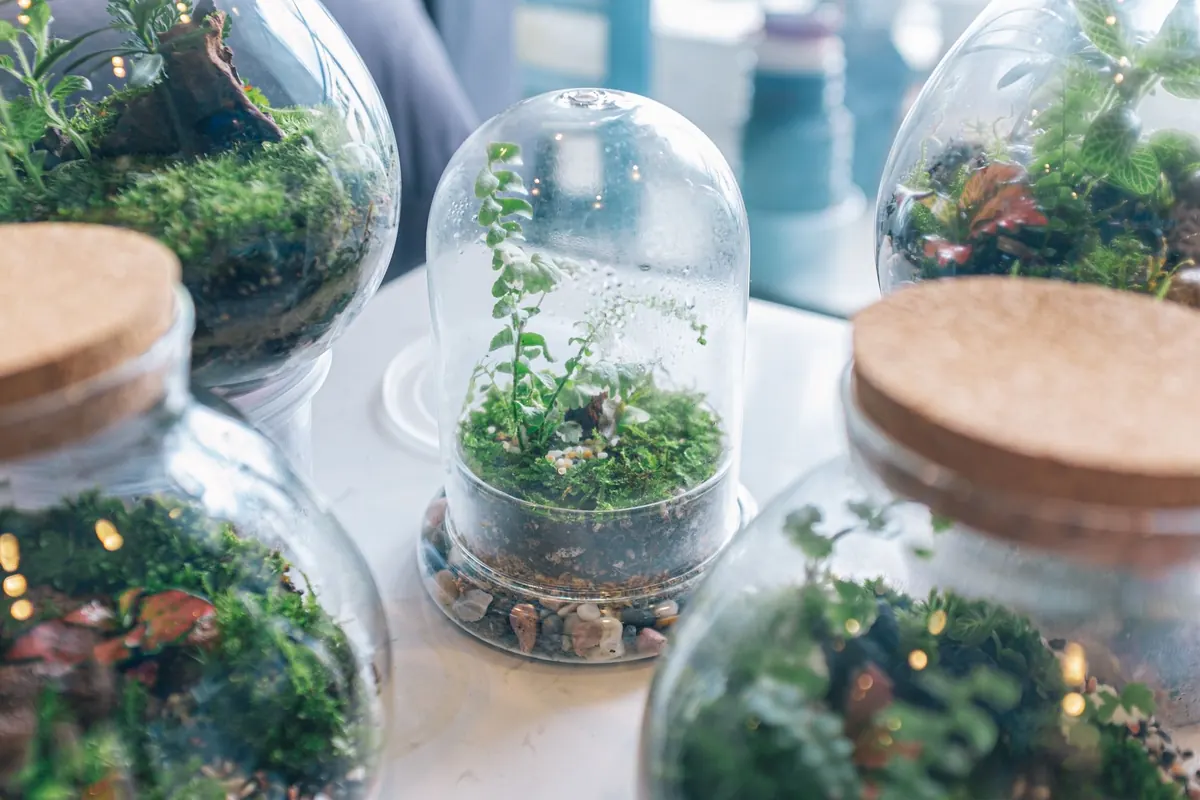
Indoor moss is not a static thing. It answers to the light coming through the glass, the temperature of the room behind it, and how damp the air feels on any given morning. In the UK those three things move constantly, sometimes within a single week. The calendar below works best as a framework rather than a rulebook: read it next to your own windowsill, then adjust.
What indoor moss actually wants
Almost every problem with a moss garden indoors comes back to one of three causes: too much direct sun, too little moisture in the air, or a base that sits permanently sodden and airless. Get those roughly right and moss is remarkably forgiving. Mosses can dry out almost completely and rehydrate without dying, which is why a crisp, brown patch is often recoverable and a black, slimy one usually is not.
Light
Most British mosses grow in shade — on north-facing walls, damp brick, woodland floors. Bright, indirect light suits them. A north or east windowsill is ideal; a south or west one will need a sheer curtain, or the pot set back half a metre or so during the brighter months.
Water and humidity
Rainwater is worth the effort. Tap water across much of the UK is hard, and repeated use leaves a chalky crust and slowly shifts the surface pH. If you cannot collect rain, let tap water stand overnight so the chlorine disperses, and accept that the hardness remains. Aim for a base that is damp but never dripping, and air around the foliage at roughly 60–80% relative humidity. A gravel tray topped up with water, or grouping several containers together, lifts humidity without soaking anything.
Air and temperature
Most mosses are cool growers. Somewhere between 10°C and 18°C is comfortable. Radiators, hot south-facing sills and draughty doorways all cause trouble. So does still, sealed air: mould and algae thrive in it. Open lidded containers for an hour or two every week, and mist in the morning so the surface has dried slightly by evening.
Winter: December to February
Light is the limiting factor now, and heating is the hidden problem. Move moss to the brightest sill you have, but never directly above a radiator, where hot dry air will undo any misting within an hour. A small LED grow light on a timer for ten to twelve hours can carry a collection through the darkest weeks.
Water less often, perhaps every seven to ten days, because growth has slowed and evaporation from the pot is low. Mist more, not less. If your windows are single-glazed, slide a folded cloth between pot and glass on frosty nights; the pane gets far colder than the room.
Spring: March to May
Growth restarts and watering frequency climbs with it — check every two or three days rather than weekly. Light strengthens quickly through April and May, so watch for scorch and for algae greening up on the surface of the substrate. This is the best window for dividing clumps, starting fresh trays and reworking tired containers. Thin out liverwort and stringy algae with tweezers while they are still small. If you brought moss in from outside, check for slugs and snail eggs before they hatch into the room.
Summer: June to August
This is the season that catches people out. A south-facing sill can easily reach 30°C behind glass, which is enough to cook a shallow tray of moss in an afternoon. Shift containers to a north or east room, or shade them properly. Small pots dry fast, so check daily during hot spells and water in the morning rather than at midday. Sealed jars left in sun become mini ovens; either move them or open them.
If you are going away, stand pots on a pebble tray with water below the base, group them tightly, and ask someone to mist once or twice.
Autumn: September to November
For most British mosses this is the strongest growing period of the year: cool, damp, gentle light. Use it. Refresh substrate, re-pot anything that has outgrown its tray, and take divisions for new projects. Keep the base evenly damp and let the damper outdoor air do some of the work, opening windows on mild days. As November closes in, trim back dead material and check that drainage holes are clear before the slow season arrives.
The year at a glance
- January: brightest sill, minimal water, mist often.
- February: add a grow light if the days drag; watch for mould.
- March: watering steps up; first proper tidy of the year.
- April: divide, propagate, start new trays.
- May: guard against scorch as light strengthens; ventilate.
- June: move off hot sills; begin daily checks.
- July: peak watering; shade everything.
- August: algae and mould at their worst — clean, thin, air.
- September: re-pot and refresh substrate.
- October: best growth; keep evenly damp.
- November: reduce misting; clean up for winter.
- December: light is everything; hold back on water.
A routine that survives a real week
Five minutes, twice a week, is enough. Lift each pot and feel its weight — light means dry, heavy means wet. Look at the colour: moss that has gone brown and brittle wants misting and a cover; moss that has turned black and slimy wants trimming, better drainage and more air. Keep a two-litre bottle of rainwater by the sink for misting so it is easier to do than to skip. A cheap hygrometer takes the guesswork out of humidity, and a notebook or phone note stops you repeating the same mistake next spring.
If you collect moss from outside, take only small amounts, ask permission on private land, and leave nature reserves and protected sites alone.
Photo: Huy Phan / Pexels